



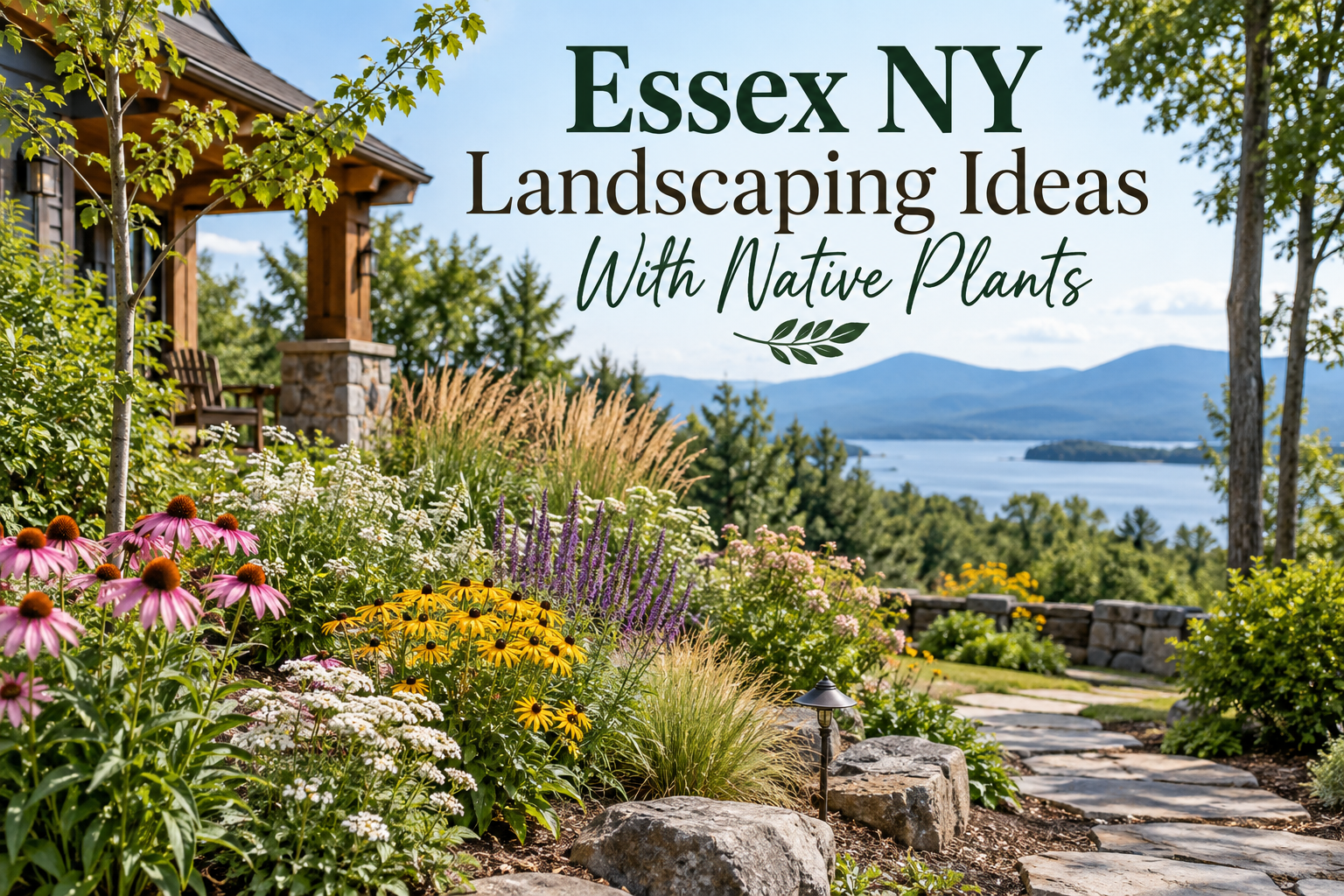
Essex already does a lot of the heavy lifting. The lake is right there. The mountains sit in the background. The town has that unhurried quality that's genuinely hard to find anywhere else. But the yard? That's where a lot of properties have untapped potential, and native plants are one of the most honest ways to bring it out.
This isn't about creating something fancy. It's about working with what this region already grows naturally, choosing plants that can handle a real Adirondack winter, and building something that actually fits the pace of life here.
Note: Plant hardiness zone and soil data referenced here draws from USDA and NRCS sources current as of early 2025. Always confirm local nursery hours and availability before visiting.
Key Takeaways
- Essex sits in USDA Hardiness Zones 5a and 5b, which shapes what survives a winter here and what doesn't
- Walk the yard before buying a single plant: sun, water, wind, and soil type tell you everything
- Native flowers, shrubs, grasses, and trees exist for every site condition in this area, from sun-baked slopes to shaded woodland edges
- Champlain Peony Company in Essex and Tromblee's Greenhouse in Crown Point are two local sources worth knowing
- Start small, watch the yard through all four seasons, and build from there
- Buyers get real lifestyle context when they understand what a yard could become
- Sellers benefit from even modest landscaping improvements around curb appeal, defined beds, and drainage
What Does an Essex Yard Need?
Before you pick a single plant, walk the property. USDA Hardiness Zones 5a and 5b cover most of Essex, which means the growing season is real but winter is serious. A plant that does fine in a Connecticut suburb may not make it through February here. The yard itself will tell you what it needs if you pay attention to it first.
Where Does the Yard Get Full Sun?
Any spot that gets six or more hours of direct sun is your most flexible canvas. These areas work well for pollinator beds, grasses, meadow-style plantings, and anything you want to be visible from the street or the water. They also tend to carry the most weight for curb appeal, so it's worth treating them as a priority.
Where Does Water Collect?
Low spots and slow-draining areas aren't problems to hide. They're actually opportunities. Water-tolerant natives like swamp milkweed or red-osier dogwood handle wet feet well, and a simple rain garden can turn a drainage headache into something intentional. Just keep all of this away from foundations, wells, and septic systems.
Where Are Wind and Rock a Factor?
If you've spent a spring afternoon on the western side of an Essex property, you know Lake Champlain generates real wind. Shallow soils and bedrock outcrops are common throughout the area too. A plant that works on a sheltered suburban lot in Burlington, VT won't always hold up here, and knowing that upfront saves a lot of frustration.
Where Does Shade Limit Plant Growth?
Shaded spots under mature trees are trickier than they look. The soil is usually packed with competing roots, and the light window is narrow. Woodland-edge natives like foamflower and wild ginger are built for exactly this condition and won't fight the existing trees to survive.
Which Native Plants Fit Essex Properties?
The table below covers plants well-suited to this region. All are native, all handle Zone 5 winters, and all were chosen for how they actually perform here rather than how they look in a catalog.
| Plant | Type | Light | Moisture | Bloom/Interest | Wildlife Value |
|---|---|---|---|---|---|
| Butterfly weed | Perennial | Full sun | Dry | Summer | High (monarch host) |
| Wild bergamot | Perennial | Full sun | Medium | Summer | High (bees) |
| Foamflower | Perennial | Part/full shade | Medium-wet | Spring | Moderate |
| New England aster | Perennial | Full sun | Medium | Fall | High |
| Serviceberry | Shrub/tree | Sun to part shade | Medium | Spring/fall | High (birds) |
| Winterberry holly | Shrub | Sun to part shade | Wet tolerant | Fall/winter | High (birds) |
| Red-osier dogwood | Shrub | Sun to part shade | Wet tolerant | Summer/winter | High |
| Little bluestem | Grass | Full sun | Dry to medium | Fall color | Moderate |
| Switchgrass | Grass | Full sun | Adaptable | Fall color | High |
| Pennsylvania sedge | Sedge | Part/full shade | Medium | Spring | Moderate |
| Sugar maple | Tree | Sun to part shade | Medium | Fall color | High |
| Paper birch | Tree | Full sun | Medium-wet | Year-round | High |
Native Flowers for Seasonal Color
The key is layering bloom times so something is always happening. Foamflower and wild geranium carry May and early June. Butterfly weed and bergamot take over through July and August. Goldenrod and New England asters close out September and October. That sequence keeps pollinators fed and keeps the yard looking alive from spring through frost.
Native Shrubs for Structure and Wildlife
Shrubs do a lot of the quiet work in a native yard. Serviceberry blooms early, feeds birds in summer, and turns orange-red in fall. Winterberry holds bright red berries through winter when almost everything else is bare. Red-osier dogwood handles wet spots and offers red stems that actually stand out against snow. These plants settle in and hold their own without a lot of fuss.
Native Grasses for Texture and Slopes
Little bluestem is one of the most useful plants for dry, sunny slopes where erosion is a concern. It turns a warm copper-orange in fall that looks deliberate, not accidental. Switchgrass adapts to more conditions and works well in larger sweeps. For shade or wet areas, Pennsylvania sedge reads almost like a lawn alternative and stays green late into the season.
Native Trees for Shade and Scale
Sugar maple is the obvious answer for shade and fall color, but it needs space to grow into. Paper birch works on wetter sites and gives year-round visual interest with its white bark. Serviceberry, which can be managed as either a large shrub or small tree, fits tighter spots near patios or entryways without overwhelming the space around it.
How Can Native Plants Shape an Essex Landscape?
The best yards in this area don't fight the surroundings. They borrow from them. Meadow edges, stone outcrops, lake views, and wooded hillsides are the regional language. A yard that works with those elements feels like it belongs here in a way that imported shrubs and turf grass never quite do.
Create a Pollinator Bed
Plant in drifts, not single specimens. Ten butterfly weed plants read very differently than one. Aim for spring-through-fall bloom coverage and repeat the same species across the bed. It looks intentional and it actually supports the pollinators that make this region feel alive in summer.
Replace Low-Use Lawn
Start with one area, not the whole yard. A pocket meadow at the back corner or along a fence line is manageable and realistic. Expect some high mowing in the first growing season while natives establish and weeds compete. That phase is temporary.
Frame a Stone Path
Flat stone paths fit this region well, both visually and practically. They hold up through freeze-thaw cycles better than poured materials, and low-growing plants like foamflower or lowbush blueberry on either side create something that looks like it grew there naturally.
Define an Outdoor Gathering Space
A seating area works better when it's buffered from wind, utilities, and neighboring views. Native shrubs like arrowwood viburnum or highbush blueberry can frame a space without cutting off the lake or mountain views worth keeping.
Protect a Slope or Wet Area
Panton soils, common near the lake, drain very slowly. Champlain soils can behave in the opposite direction. Knowing which one you're dealing with changes the plant list considerably. The site tells you what it needs. The plant list follows from there.
Where Can You Find Local Plants and Help?
Plants grown in this region are already used to the winters, the clay soils, and the frost timing. Local stock tends to establish faster than mail-order plants. Always confirm native status before buying and ask where the plants were propagated.
Visit Champlain Peony Company in Essex
Champlain Peony Company sits at 1502 NYS Route 22 right in Essex. It's worth knowing beyond just the nursery. They combine plants, a music studio, and coffee in a way that makes it a real local destination, not just a quick errand. Peony varieties are a specialty, and they carry other regionally suited plants as well. Hours shift seasonally, so call ahead before making the trip.
Visit Tromblee's Greenhouse in Crown Point
Tromblee's Greenhouse in Crown Point runs five greenhouses and has been a reliable resource for regional gardeners for years. Native inventory varies by season, so it's worth calling ahead to ask specifically what's in stock.
Ask Local Landscapers About Site Experience
Someone who has worked on lake properties, dealt with Panton clay, and planted around bedrock outcrops is a different resource than someone who learned on suburban lawns. Ask specifically about their experience with deer pressure, drainage work, and snow storage before committing to anything.
How Should You Phase a Native Landscape Project?
The biggest mistake is trying to do too much in year one. Native landscapes reward patience. The plants need time to root, and the yard needs to be watched through all four seasons before you really understand what you're working with.
Start With Drainage and Access
Resolve grades, runoff paths, plow routes, and septic access before planting anything. Getting this wrong means redoing work later, sometimes pulling out plants you just put in.
Plant One Manageable Area
Pick the entrance, a patio edge, or one low wet corner and do that well. A single well-planted area teaches you more about your yard than any amount of planning does.
Watch the Yard Through Four Seasons
Spring saturation in a low corner, summer shade from a maple that doesn't leaf out until June, fall wind off the lake, snow drifting against the north foundation. These things only show up when you live with them. Watch first, expand later.
Add Larger Beds Over Time
After one full year, you'll know which plants took, where deer browsed everything to the ground, and which spots were wetter than expected. That information shapes year two far better than any plan that hasn't been tested yet.
What Should Buyers and Sellers Notice About Landscaping?
The yard is part of the property. That sounds obvious, but a lot of buyers and sellers underestimate how much it affects both daily life and how a home shows on the market.
Buyers Should Assess Maintenance and Drainage
Walk the property with grading in mind. Is water moving away from the foundation? Are there mature trees close enough to cause root issues? What does the shoreline look like? These things affect cost and livability more than the flower beds do.
Sellers Should Simplify and Define Key Areas
You don't need a full project to improve how a property shows. Edged beds, cleared paths, selectively pruned views, and a clean entrance make a real difference. Overplanting before a sale tends to backfire. Define the space, remove what's dead, and let the property speak for itself.
Remote Buyers Should Request Seasonal Context
If you're buying from a distance, ask for photos taken at snowmelt in April, a video walkthrough in July when everything is leafed out, and any history on drainage or flooding. A yard that looks fine in October can behave very differently in May. A good local agent offers that context without being asked.
Frequently Asked Questions
How long does a new native garden take to fill in?
Most native perennials and shrubs spend the first year building roots rather than putting on visible growth. By year three, a well-planted bed typically looks full and settled.
Can peonies and other ornamentals grow with native plants?
Yes, non-invasive ornamentals mix well with natives. Check with the Adirondack Park Invasive Plant Program before introducing any unfamiliar species to make sure it won't spread into surrounding natural areas.
How can a native garden look tidy and intentional?
Repetition, defined edges, and a few strong structural plants do most of the work. A path through the planting and consistent mulch depth also help the yard read as designed rather than left alone.
Do waterfront owners need approval before changing a shoreline?
In many cases, yes. The DEC General Permit GP-0-25-007 covers some shoreline work, but APA jurisdiction and local zoning also apply. Check with DEC, APA, and your town before changing anything along the water.
How much watering do native plants need after installation?
The first season calls for consistent deep watering, roughly once or twice a week depending on rainfall and soil. After that, most established natives in this region handle dry stretches well on their own.
Check out this article next